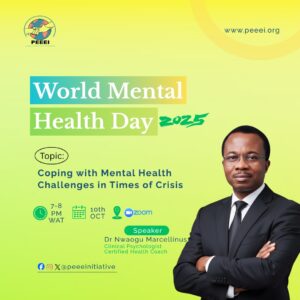
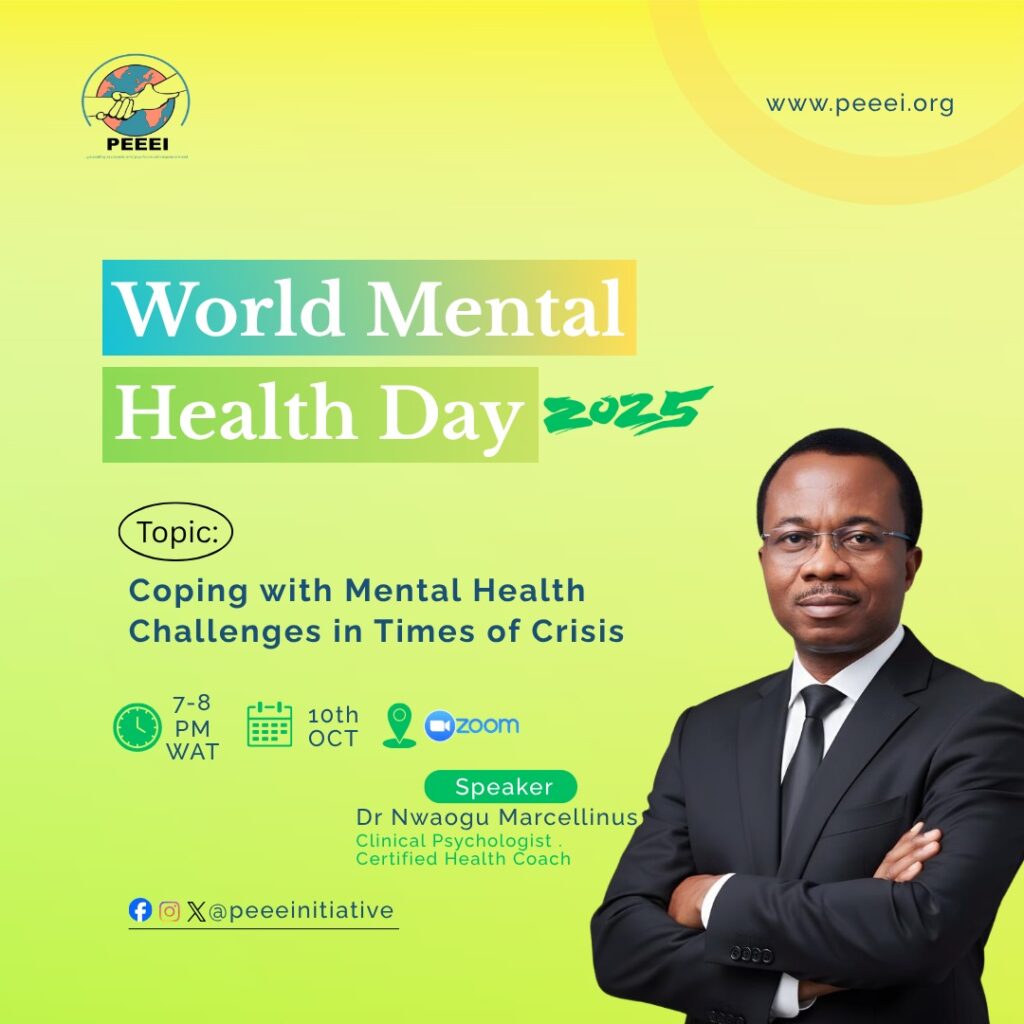
On the wake of October 10th, 2025, as the world paused to reflect on mental health, a quiet ripple of empathy and connection spread across screens. From homes, offices, and communities around Nigeria, 38 individuals—nurses, bankers, students, civil servants, and entrepreneurs—gathered in one virtual space hosted by the Priscilla Ekwueme Eleje Empowerment Initiatives (PEEEI).
The occasion? A heartfelt commemoration of World Mental Health Day 2025, themed “Coping with Mental Health Challenges in Times of Crisis.” Though the session lasted just one hour, its impact stretched far beyond the Zoom call.
BRINGING THE GLOBAL CONVERSATION HOME
In her opening remarks, Mrs. Priscilla Eleje, Executive Director of PEEEI, set the tone with warmth and sincerity. She reminded participants that mental health is not just a global issue—it is a deeply personal one.
While the world’s theme, “Mental Health in Humanitarian Emergencies,” spoke to large-scale crises, PEEEI chose to localize it. “Coping with Mental Health Challenges in Times of Crisis” became a way to help everyday people make sense of their struggles in the context of Nigeria’s realities—economic hardship, insecurity, and emotional exhaustion.
Her message was simple yet profound: caring for one’s mental well-being isn’t selfish; it’s a collective necessity.
A CONVERSATION THAT TOUCHED THE HEART
The keynote speaker, Dr. Nwaogu Marcellinus, a clinical psychologist, captivated participants with relatable insights about mental health. He described the human mind as elastic—capable of stretching under pressure, but vulnerable to breaking when stretched too far.
In a country where mental health is still shrouded in stigma, Dr. Nwaogu’s honesty was refreshing. He lamented that many still seek help in unregulated traditional or spiritual centers, often facing inhumane treatment. “Patients may forget the medication they were given,” he said gently, “but they will always remember how they were treated.”
He emphasized that crises—both external (like conflict or financial hardship) and internal (like anger, fear, or resentment)—affect mental balance. And while we can’t always control external chaos, we can manage our inner response. “Anger,” he reminded listeners, “is like drinking poison and expecting someone else to die.”
LESSONS, LAUGHTER, AND LIGHTBULB MOMENTS
During the interactive Q&A, the session blossomed into open dialogue. Participants asked real-life questions—about the fine line between sanity and insanity, about burnout, workplace stress, and how to help loved ones in distress.
Dr. Nwaogu answered each with care. He explained that mental health issues and psychiatric disorders exist on the same spectrum, only differing in severity. He also underscored the need for Employee Assistance Programs (EAPs) to support mental wellness at work.
One participant summed up the collective learning perfectly:
“Control your anger, grudges, or hatred. Know that mental health is within your control. You cannot determine what someone will do to you, but you can control your reaction.”
The chat buzzed with gratitude, reflections, and renewed awareness. For many, it was the first time they had spoken so openly about emotional struggles.
IMPACT BEYOND THE SCREEN
By the end of the event, the energy was palpable. Participants described the session as “enlightening,” “eye-opening,” and “deeply moving.” They left not just informed but empowered—with a clearer understanding that mental health deserves as much attention as physical health.
Through this simple yet powerful virtual gathering, PEEEI achieved something profound:
• It raised awareness and made mental health relatable.
• It challenged stigma through open dialogue.
• It equipped participants with practical coping strategies.
• It inspired collective action to promote empathy and support for others.
Even after the session ended, PEEEI’s commitment continued. The organization plans to sustain engagement through MindCare Tips—short, periodic posts offering encouragement and practical advice to help people manage stress and nurture emotional resilience.
A GENTLE CALL TO CARE
In her closing remarks, Mrs. Eleje’s words lingered like a soft echo of hope:
“Self-care is not selfish—it is essential. Take rest. Laugh often. Be kind to yourself. Find joy in the simple things.”
World Mental Health Day 2025 was not just an event for PEEEI—it was a reminder that healing begins with awareness and compassion.
As participants logged off at the end of the event, many carried with them a quiet resolve: to care for their minds, to extend grace to others, and to keep the conversation alive. Because sometimes, the most powerful act of strength… is simply choosing to care.